Showing posts with label climate change. Show all posts

Tuesday, October 25, 2022

Frozen Planet II – episode 2 – review


Harp seal mother and pup, featuring in episode 2 of Frozen Planet II. (Image source : bbc.co.uk)


With the grand opening theme as provided by Hans Zimmer, we begin episode two of Frozen Planet II – Frozen Ocean. This episode casts an eye over the Arctic, its landscape and wildlife, through the seasons.

From here on out, a spoiler alert is in effect. Though if anybody has waited as long as I have to watch this series, I would be surprised!


As you might expect from any nature documentary series to which Attenborough is attached, there are beautiful shots of epically wonderful locations and wildlife. Both awe inspiring and dramatically vivid. Shots of polar bears are beautiful, and striking. Scenes of them hunting seals, with vibrant red blood splashed across pristine ice and white fur, are particularly impressive – capturing the beauty and violence of nature all at once.

But also there are purely touching moments. When a female bear meets a male of the species, conflict and violence is anticipated. However, instead, they play. And we watch the animals skating across the ice together, as Attenborough narrates, "apparently, just for the joy of it." 

A moment that reveals a depth to the animals most might never see.


A theme of this episode is the temperamental nature of the Arctic environment, of how the landscape changes with seasons, or even from one minute to the next. An aspect of the Arctic that dominates the lives of the animals that live there.

In spring, as temperatures creep above freezing, ice melts and great change inches across the landscape. To emphasise how this changing landscape influences the lives of animals here, we are introduced to beluga whales which, because of ice cover shifting because of spring melt, are at risk of losing open water where they can surface to breathe.

A risk that these animals must face every year.


Later, we meet a one week old harp seal pup and its mother. Its fur is thick and pristine white, matching the icy scenery. Beautiful shots of the pup feeding from the mother as a light snow falls are gorgeous. Indeed, so rich are the images that the viewer risks getting lost in them, missing Attenborough's excellent narration of the events on screen, supplemented with scientific findings and statistics.

The underwater shots of the pup, as it takes its first dip into Arctic waters, are worth watching the episode alone. It is shots like these that make this documentary series a wonder to watch!


Time passes – weeks pass in minutes . . .

The scenes of this pup end sadly in a storm, with the narration informing the viewer that, because of rising temperatures at the Arctic, storms are becoming more frequent, and seal pups are being forced into the sea before they are ready be in the water for any significant period. The story of this seal pup ends ominously with scenes of the youngster on an ice floe being battered by stormy seas.


Two-centimetre skeleton shrimp might not be the highlight of the episode, or even sound particularly interesting to many, but one of the things that these nature documentaries do, through excellent camera operation, is to reveal the beauty and intriguing nature of even the smallest life. 

And, from some of the smallest lives in the sea to some of the largest, and longest lived – bowhead whales, which might be a couple of centuries old!


Killer whales, as viewers of previous series might know, tend to promise dramatic scenes. And, when they appear in this episode, Attenborough tells the viewer that the pod we see on screen specialises in hunting bowhead whales.

And so followsscenes of battle and blood in the water. Never pleasant, but as I mentioned in the review of the first episode, a documentary which documents events selectively is close to being no documentary at all. 

The killers hunting bowheads is natural. However, we learn that more and more bowheads are being lost to killers for one reason – rising temperatures. With less ice, which the bowheads use as cover and protection when targeted by killers, the bowheads are more easily predated by the orca.


There is more. Walruses rolling from beaches into the sea to try and escape rising heat, and polar bears, bloody-faced and aggressive, coming into conflict with each other over stretched resources. All for one reason – rising temperatures.

One fears that, by now, there will be some rolling their eyes and turning away.

Nature documentaries now must navigate the problem of how to approach the subject of climate change when there are sections of the audience that will never hear it. When scientists are now predicting that the Arctic will be ice free in summer by 2035, there is urgency to documenting and studying rising temperatures and the causes. But, a quick glance at Twitter will tell you there are those who will dismiss the topic out of hand.

The series is revealing in more ways than one; the scenes upon the screen, and the hashtags and opinions screamed into the void across social media following each airing.


In the previous review, I did not mention the segment following the main programme during which we get an insight into the work behind the scenes. It is worth watching and rightfully shines a light on the excellent work of those on location, documenting the nature and wildlife.

In this segment, we follow the team behind the shots of the harp seal mother and pup mentioned earlier. And, in these segments too there is drama. We follow the camera operators in the icy waters striving to get shots of the pup underwater. And then there is the drama of boats trapped between shifting ice floes.

The segment ends with the team forced to abandon the seal pup because of stormy weather. We see the pup left to its fate from behind the scenes this time, and it is as tough a watch from this point of view as it was earlier in the documentary.


Thank you for reading, but just before you go, could I ask you to consider buying a coffee for the writer of this blog here – the caffeine keeps my fingers tapping across the keys.

I hope to produce something worth reading, and resist allowing ad space here, so support from readers is much appreciate.

You can also subscribe to the blog, share this post, and leave a comment below to show your support!

Thank you again!

Sunday, August 21, 2022

Communing with nature, and nature lovers


 Capsicum and water droplets; sometimes nature is right outside the door. (Photo from personal collection)


As a lover of nature and wildlife, I often see my outdoor experiences as meditative, or as a communion with nature. On any long distance ramble, as I huff and puff through forests and fields, there is usually at least a moment of peace and clarity. Slivers of green and blue break through the concrete grey and black mirrors.

In today's posting, I want to reflect on, and look forward to, my interactions with nature and wildlife. And, I hope some of you might join me. 

Please do drop some of your answers to the following questions in the comments below.


How will you interact with nature today?

My most frequent interactions with nature happen in the garden. It doesn't matter what else is going on, how otherwise engaged I might be, I can make a minute or two, at least, to slip into the garden.

Personally, I am a fan of the unkempt and the overgrown. Whatever that means. The bees, the birds, the butterflies, and moths seem to like it too. Neighbours have their lawns and paving, but they don't seem to get quite as many wild visitors. And I know which I prefer. Life. Wildlife.

Yesterday, I watched a bumblebee visiting the flowers on my chilli pepper plants. A week or so ago, a wren flitted in and out of the budleia. A hummingbird hawkmoth regularly visits the budleia and red valerian. 

There is a lot of nature and wildlife just outside the door.

Do you have a garden? A balcony? Where will you go today?


Out walking, and sweating, in July. (Photo from personal collection)


How will you interact with nature this week?

When a day is free before me, when I want and need for nothing else, I love taking off on a countryside footpath and rambling for hours. That has been a constant for me since I was quite a bit younger. And the rambles were easier.

The physically exhausting experience of dragging oneself up and down hills, sweating and breathing harder, rewarded with nature and wildlife, is wonderful to me. Buzzards, red kite, swifts, swallows . . . All have passed overhead as I traipsed the outdoors this summer. All made me stop and wonder. They on wing, me on foot, for a moment together we  knew the struggle and peace in the transience of things.

Perhaps too, in walking long distances, over stretches of land untamed by slabs and pavements, there is a reconnection. A small step back to the ways of ancestors that better knew the ways of nature, and how to read its signs and clues.

How will you interact with nature this week? Are you a rambler too? Or, are you more inclined towards birdwatching in a hide?


Try anything new lately?

I am always learning, and there is always something new to discover. There are vast holes in my knowledge of the natural world and the wildlife around me. But, this is nothing to be ashamed of.

It doesn't matter whether you're taking your very first steps as a naturalist or your Chris Packham – none of us can possibly say we know all there is to know!

Our understanding of the natural world is ever evolving, in no small part because the natural world itself is ever evolving.

My pockets, my backpack, hold pocketbooks and guides to help me identify birds, flowers, leaves, and other things I don't recognise. I am ever learning, and the newest thing I did is probably going to be some scrap of knowledge I acquired. 

Identifying a flower, a bird, learning the difference between one call or song and another . . .

What about you? What have you learned recently? Or, have you had a brand new experience?


Where were you six weeks ago?

Six weeks ago, we were, globally, going through one of the hottest Julys on record.

The headlines told of rivers drying up. Landscapes that had been green weeks before were turning golden brown. And, here in the UK, we saw temperatures touch record breaking highs – over 40°C in places.

With drier, hotter summers a real possibility for the future, has this summer given you pause? What do you know of the consequences facing us if this becomes the norm? Or did you just welcome the summer sun?


Where will you be in six weeks time?

Autumn, winter on the way . . .

My mind turns to orange, brown, and red leaves littering the ground. I think of crisp, cooler days. I think of rain. I imagine those footpaths that, at the moment, are baked dusty dry, that will perhaps become mud.

In the garden, I will be thinking about preparing plants for winter. The strawberry plants that I will trim back when winter comes, and bed up with straw as they go dormant through the colder less sunny months.

Autumn is a time for preparation, as conditions change. A time for looking at what you have, being grateful, and a time for looking forward.

Nature and wildlife will also be preparing; gathering foods that will see them through winter, preparing for vast journeys, for some it is the time to breed . . .

In six weeks, we will be in early October. Where do you think you will be? How will your interactions with nature change? How will you have changed?


Thank you for reading. If you enjoyed this piece, or any other, you can buy the author a coffee here.

But, there is a cost of living crisis, so if you can't do that, you can show your support by liking this piece, leaving  a comment, sharing, and subscribing. 

Thank you again.


Tuesday, May 3, 2022

Getting back to normal . . .


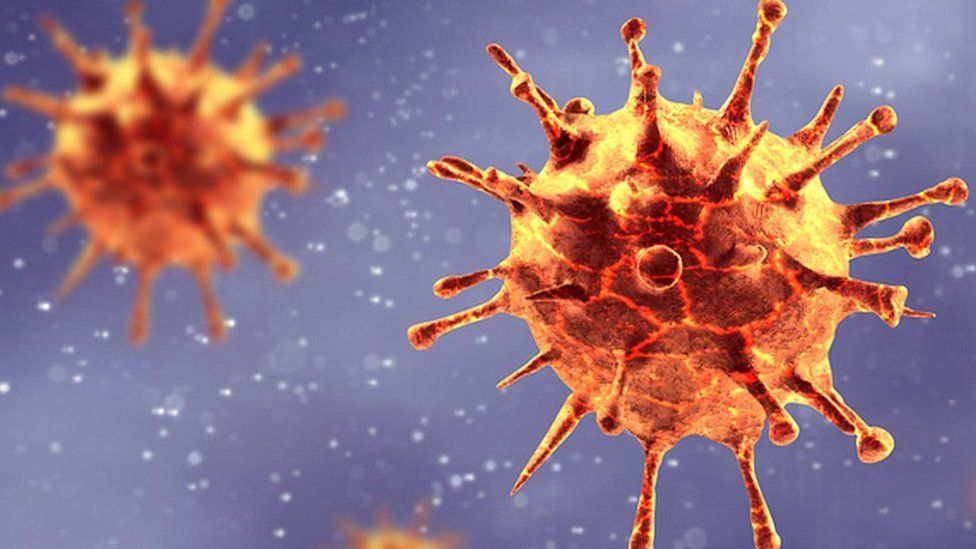
(Image source: bbc.com)


Nature doesn't care about our egos, and it doesn't care about money in the bank, or political ideologies. Nature really doesn't care about anything except that which is real. That is to say, that which has come into being, and passed, according to the rules and forces of Physics, Chemistry, and Biology - rules and forces to which, sorry, we are bound by, you know, the Universe.

So, as we take to Twitter - or whichever social media platform is your favourite online space for adding to your anxiety - and get lost in the comments, Nature is going to follow the rules and forces to which she is bound. 


The last couple of years were a natural clarion call; a dramatic example of what can happen when we force our way into the wild, and engage in poor animal husbandry. But then, this is not the first time we have heard such a call . . .

Back in 2003, the SARS outbreak was identified as having originated in animals. In fact, the majority of emerging infectious diseases originates in domestic or wild animals. One of the lessons learned from the 2003 SARS outbreak was that "animal husbandry and marketing practices seriously affect human health". (SARS - How a Global Pandemic Was Stopped, by WHO).

So, just under twenty years later, with another coronavirus causing fear and social disruption, one might be left scratching their heads as to why we weren't better prepared. And, according to the writing on the wall, this is not going to be the last time a pandemic will disrupt our lives. Which makes the keenness of "getting back to normal" confusing. Well, not entirely confusing - commercial, corporate, and political ideology are usually at the root of it.


The behaviour and movements of species on this planet are changing with the climate (National Geographic - Half of All Species on the Move, April 2017), which means that species are going to be meeting each other that may not have done so before. This, in turn, allows for greater opportunity of zoonotic transmission of diseases, and greater risk of future pandemics.

In this article from Nature (28 April 2022), we find projections that model how "climate change could drive more than 15,000 new cases of mammals transmitting viruses to other mammals" because of these increased opportunities for transmission due to climate change. One way or another, it seems, normal is going to be something quite new.


It doesn't matter which side of whatever debate you are on when it comes to this latest coronavirus, or its consequences and government handling of the crisis - all of us would rather not have to endure them. So, if not for the planet and the natural world itself, we need to consider the consequences of our behaviours, and how we interact with the natural world and the species that live there. 

None want for anyone to live in constant fear and anxiety. But Nature doesn't care how much we rant and rave on Facebook; we are, none of us, bigger than the laws of Nature and the Universe. So, we can accept what we are seeing and evolve to meet the challenges, to consider our impact on the planet and how we are infringing upon wild places, or we can exist in denial and, perhaps, in another twenty years, if not sooner, we'll be crippled by another virus.

If not for the natural world itself, then surely in the name of our own interests we can change our ways . . .


Before you go, can I please ask you to consider supporting this blog with a coffee from ko-fi.com.

I resist ad space here, hoping to generate conversation, rather than clicks and sales, and being able to write without consideration for commercial and corporate sponsors means that I can share information and opinion influenced only by research.

If you can, please do leave a small donation through ko-fi.com, where you will also find links to other of my writing. However, if you are unable to donate, you can also support this blog with a like, a share, and a subscription.

Thank you for reading!


*As well as the articles referred to in the above piece, I also consulted Dr Hammond's Covid Casebook by Dr Phil Hammons, Private Eye, in the research for this post.

Citizen science -- for the good of nature

  Holly blue (Celastrina argiolus) -- Butterfly Conservation undertake the Big Butterfly Count every summer, between July and August. (Photo...