Showing posts with label wildflowers. Show all posts

Tuesday, August 30, 2022

Wild garden : making space for birds


A view from the garden. (Photo from personal collection)


Food

I stand at the sink, washing out my coffee mug, and look out on the garden. After breakfast and coffee, it's always time to go out and check on the plants and the birdfeeders.

Outdoors, the temperature is around twenty-one degrees Celsius, and the day feels fresh. Certainly more comfortable than those summer days earlier in the season, when the sun beat down oppressively.

The first task in my routine, I rinse out the birdbath, a makeshift thing made out of a planter dish, stones, and bricks. This removes feathers, leaves, seeds, and whatever else might be muddying the water. Cleaner water makes for a more pleasant bath/drink. Plus, running water draws attention, and not just from birds; I have noticed that wasps often fly in for a drink as I am pouring water into the bath.

Makeshift birdbath. (Photo from personal collection)

Next, I check the feeders. One, a seed feeder, lantern shaped with a circular lip running around the base that small birds can cling onto, feeding on seed that collects in the bottom. The other is a hollow ceramic cactus into which birds can enter and exit through holes on either side of the feeder.

I check the feeders for a few things. Firstly, to see what has been eaten. This is useful to check on everyday because, of course, I can top up as and when needed. Also, as I get to know how much the birds eat on a regular basis, I can better judge and adjust how much food I put out for the birds. Feeders don't need to be filled full. It is better to put out what you might expect to be eaten over two or three days. Food that is left for too long runs the risk of becoming mouldy, or attracting unwanted attention. 

Checking on what is eaten from the feeders on a regular basis will also enlighten me to any changes in the feeding habits of feathery garden visitors. This could be useful for a number of reasons, such as responding to changes in behaviour and needs as seasons change, or perhaps  might hint at changes in which birds are visiting the garden.

The suet feeder I check because of the reasons above, and also because, in my experience, they can be particularly vulnerable to certain circumstances. For example, during the hottest days of this summer, the suet feeder began dribbling its contents onto the ground below!


There are other, less direct ways that the gardener can go about feeding birds. The plants we cultivate and allow to grow in the garden ought to be bird friendly might produce seeds for hungry birds, and they might attract insects which birds will eat.

Native wildflowers are excellent because they are the flowers to which our native insects have adapted and with which they have evolved alongside.


Shrubs and trees also make for excellent hunting grounds, where Wren might flit into looking for insects and spiders to eat. And, it makes for great cover, should the smaller birds that feeders attract have to evade a predator – a Sparrowhawk has been a regular visitor here!

Please, don't vilify those birds and other animals which predate these smaller birds. They are only doing what they have always done. They cannot possibly be responsible for the dramatic declines in the last five or eight decades. None of them have developed extraordinarily more efficient hunting methods in that time. 

We might do better putting back some of the things we have removed from the landscape – hedgerows, shrubbery, wildflower meadows – before vilifying wildlife.


Health

Once a week, I clean the feeders and the bath – this is vital to providing a healthy space for birds in the garden.

Just as we humans are more susceptible to catching viruses and other ailments in spaces where we come together most often, the same is true of birds. This means that unclean feeders are a hotspot for diseases to be passed between birds.

Parasitic viruses, such as trichomonosis, can be passed from one bird to another through saliva. Faeces too, of course, should be cleaned for the same reasons.

In nature, when birds feed on fruit from trees, for example, that source of food will need time to replenish. And so, it will be some time before a number of birds visit that exact same spot again after other birds have fed there. However, birdfeeders, which are frequently refilled, will attract birds to the same spots over and over again. This increases the chances of cross infection between birds, and is good reason for keeping feeders clean.


I use a bucket, hot water, soap, and a sponge. Some feeders are easier to clean than others, it is true, but there are feeders on the market now which are designed to be easy to clean, precisely because it is acknowledged how important clean feeders are to the health of garden birds. However, with pipe cleaners, toothbrushes, nail files, or whatever tool you can get your hands on, you can get into those hard to reach places a little more easily.

As a little tip, the RSPB sells a birdfeeder cleaning kit, and other hygiene products, in their online shop – here.


And so, coffee mug cleaned – feeders and birdbath too – I can sit a while and watch. Bees and butterflies visit the budleia. Sparrows are holed up in the Philadelphus, sometimes flitting to the hawthorn or the budleia. A wren has visited before, and also took a liking to the budleia. Some don't like it, but wild visitors seem to love it.

The garden hums and buzzes and chirps with life. Allowed a little space, life comes. And it makes for a much more pleasant scene than a dull, manicured patch of lawn.


Thank you for reading.

Please, leave a comment about the birds in your garden, share this post with your friends, pop a little like below, and subscribe.

You can buy the author of this blog a coffee here too, to show your support and keep the blog going.


Saturday, May 14, 2022

Amazed by Life in the Garden


One of my crooked but beautiful poppies. (Photo from personal collection)


Whenever I talk about my interest in gardening and plant life, I often tell people how it all began with my love for wildlife. Animal life just seemed so much more dynamic and interesting to me when I was younger. It wasn't until I was a little older that my consideration for nature grew to encompass plant life and gardening.

I have never cared for worrying over a well-manicured lawn. And I have no interest in planned and perfected tidy gardens. My interest in gardening has very much stemmed from my care and concern for nature. It is one small way in which I can give a little back to something which has given me so much.


The other morning, I watched amazed as a bumblebee, either a White-tailed bumblebee or a Garden bumblebee, I think, visited one of the flowered poppies. That is what it had all been for. All the checking and tending, meeting the needs of the plants as and when they arose.


The flowers of a poppy have no nectar, but they are rich in pollen which provides the bees with essential proteins and fats. 

My poppies have grown in crooked, and I think that there are probably containers out there that are much more "Instagram ready". But I couldn't care less because it was for the bees, and other pollinators, that I sowed the seeds last year.

Yeah, of course, I snap a few pictures, and yes, I share those pictures across my social media. But if nobody but the bees show appreciation for those scarlet flowers, that's just fine with me.


Perfect red petals at the ends of crooked hairy stems, and other hairy little buds ready to burst wide open. (Photo from personal collection)


Poppies are an annual herb. I sowed the seeds last year, and they lived in the soil of my container for a little while. The seeds germinated last autumn, and the plants spent the last year making themselves at home in the container. They have faced challenges; some of the storms of the last year left them a little battered. But they revived, for the most part. They retained enough strength that they began to flower this month.

Once these sunnier months are over, I will collect the seed heads, and sow those seeds in hope of another crop next year. Though, perhaps I will keep some of those tasty seeds back for myself!


Though my interest in plant life stemmed from my passion for nature and wildlife, I have discovered a real appreciation for plants themselves. They are incredibly resilient and strong. I have checked over plants in the garden, thinking that they were beyond saving, looking brown and shriveled, only to later find them looking green and verdant again a day or so later. They have taught me that, given the chance, life will endure.

As for the part they play in the wider ecological landscape, they are at the centre of life on this planet. Of course they are. They are vital to all forms of life on land. They provide food, clean air, materials for shelter, medicine, and even mental wellbeing. Yeah, they have definitely earned my appreciation, and I stop amazed, just to see how they have grown.


Before you go, can I ask that you please consider supporting this blog with a coffee from ko-fi.com.

I resist allowing ad space, hoping to generate conversation in this space, rather than clicks and sales. With support from readers, I can write freely with my considerations being only for my own experiences and research, as opposed to obligations to commercial and corporate sponsors.

If you can, leave a small donation via ko-fi.com. And you can also like, comment, share, and subscribe to support this space.

Thank you, readers and supporters!


Tuesday, May 10, 2022

A Garden With A View


European garden spider (Araneus diadematus) drinks from a water droplet in the garden. (Photo from personal collection)


Begrudgingly, I live five minutes walk from a town centre. It is a setting of red bricks and grey concrete. On Saturday and Sunday mornings, splashes of puke and discarded takeaway containers dot the pavements. Plastic wrappers and aluminium cans just as likely to colour grass verges as wildflowers. But there is the garden . . .


The mornings are informed by coffee aroma, bird calls, and flowers. Recently, the poppies (Papaver rhoeas) started to bloom, petals like vibrant drops of blood, or a saucy lipstick shade. The Spring sun  has been coaxing the plants into flower. And, as rich dark coffee filters through paper, the mornings are a tableau of visiting birds, those pretty flowers, and the squeal and strain of concrete urban noise.


A blackbird (Turdus merula), a female, has caught my attention recently. She visits my makeshift bird bath for tentative sips, more often than not hopping into the water afterwards. She splashes about and scratches at her head with one of her feet. Then she'll visit the peanuts and oat mix I leave on the ground for her, and whoever else might fancy the food. She is braver than some of the other garden visitors and seems to mind my presence less. 

Woodpigeons (Columba palumbas) visit and, despite their being larger than other birds in the garden, they are some of the most skittish visitors. They absolutely will not land and partake of anything on offer if I am out there. From a window I might be allowed to watch one of them, but even then they circle food and water warily. They draw close, take a beak full, and move away again.

The pigeons are often thought of as dirty and grey things, but this isn't quite fair. The Woodpigeon might just seem grey at first glance, but their chests have a little splash of purple, and around their smart white collars there are patches of slightly iridescent green. Their plump and proud breasts belie their timid hearts. Even their relatives, the Feral pigeons (Columba livia), common to many a town and city centre, can be quite colourful. And their often unkempt appearance and poor condition has much more to do with how our own inefficient waste disposal impacts upon the environment and wildlife. Perhaps their appearance reflects more poorly on us than it does them. Those scrappy little underdogs are just doing the best they can with what they have.


A timid Woodpigeon (Columba palumbas) visits the peanut and oat mix. (Photo from personal collection)


Coffee cup empty and a desire to get outside, I go and check on my plants. My little garden is expanding and I, at the time of writing, now have six pots containing chilli pepper plants, three potted strawberry plants, and a variety of wildflowers for pollinators and any other little lives that might benefit from their presence. It is not the most impressive garden anyone could set their eyes upon, but it suits me just fine for now. Though I do hope to expand further as time goes by - their is a pride in bringing a plant to flower and fruit that is quite addictive. And, oh, then to see bees, butterflies, and beetles benefit from the plants of the garden!


Last year, I introduced a single potted strawberry plant to the garden, and that parent plant provided me with two other plants, as well as delicious fruits. I was proud to find that they survived their overwintering, snuggled up quite cosily beneath a blanket of straw during those cold months. They have returned this year, green and strong. Flowers come before the fruits, and a number of blossoms have appeared on two of the plants. The third, the smaller of the three, shows no flowers yet, but is green and vibrant. And I am proud of that little verdant plant; through the winter it looked unwell to my eye and, at one point, I thought it was dead. It had looked like nothing more than a little brown stump of a shoot to me.

The chilli pepper plants are a first for me. A little research lead me to understand that they fair better in glasshouses before being planted outdoors. However, without a glasshouse or proper propagators, I decided instead to use a pair of transparent buckets to cover the pots in which I planted the seeds. Then I placed them in the sunniest spots of the garden. And, so far, it seems to have worked. Of course, as I said, this is a first for me, and these are early days . . . But the seedlings are promisingly green and healthy in appearance.


My little garden - strawberry plants, chilli pepper plant seedlings, and Evening primrose at the centre. Those vibrantly red poppies in the background. (Photo from personal collection)


I quietly advocate for gardens that are as wild as possible. Wildflowers are where my own interest in gardening began a few years ago. Or, to be more accurate, my interest began with a concern for the pollinators, their importance in that big wide wonderful ecological web, and the trouble that they were in, and still are unfortunately. From there, my endeavours increased and grew to encompass a seed of interest in self sufficiency. So, amongst the flowers for birds and bugs, there are fruits for myself too.

Yes, though these efforts and these plants are for the lives that call the garden home, they are also for me. And they not only satisfy my health in terms of cultivating fruits and food that I know are as fresh and organic as I know how to produce. They also calm the mind.


It has been discovered, through EEG measurements (Electroencephalography) that when human beings see fractal patterns in nature brainwaves indicate a relaxed state. These patterns made up of smaller and smaller patterns, these fractals, are ever present in nature. They are found in flowers, in snowflakes, and trees - just a few examples. The closer you look at the patterns, the more patterns are revealed.

Why do these fractals produce such a reduction in stress? By as much as about 60%? Induce a relaxed state of being?

It is thought that, put simply, human beings feel so much calmer in the presence of nature's patterns because we evolved alongside those patterns in nature, and so our brains are wired in such a way that we process this visual information quickly. *

So, as I gaze into flowers and leaves, and I feel calm and peace descend, there's a scientific explanation for that!

There's also those little antidepressant bacteria in the soil. And, oh, just the poetry and romance of being around nature. 


Yesterday, in the evening, I sat for an hour, just watching what took place in the garden. I watched the poppies wave in the breeze, their delicate petals already bruising and ruining. I listened to sparrow calls and train wheels squealing on tracks. The calling of a collared dove in the distance, the calls of children playing out there somewhere too. The smells of food cooking wafting from some neighbour's flat window. But, yes, through the urban sounds and smells, there are the birds and flowers.

The garden is a collage of House sparrow calls, the flap and clap of a startled Woodpigeon's wings, and a Magpie's harsh voice from a branch somewhere behind me. A little splash and my attention is drawn to the bird bath - the female blackbird is bathing. I take in the plants I have grown , the birds and bees invited by food and flowers, and just feel calm. And I feel quiet pride. 

A good garden, perhaps especially when it is situated in the middle of a concrete town or city, is a blessing.


* If you would like to read a more detailed description of fractals in nature and their impact on our wellbeing, you can do so here, in this article from The Atlantic (26/01/2017).


Before you go, can I please ask that you consider supporting this blog with a coffee from ko-fi.com.

I resist ad space as much as possible, hoping to generate conversation rather than clicks and sales. With the support of readers, unbound by the influence of commercial and corporate influence, I can write with consideration for nothing but the research and experiences of the author.

If you can, please do visit ko-fi.com to donate a small tip. Or you can like, comment, share, and subscribe - it all helps to support the writing!

Thank you for reading and supporting this blog.

Thursday, April 28, 2022

The Nature Reserve and a Green Woodpecker


Cowslip; Primula veris. (Photo from personal collection)


The Nature Reserve

A path of dirt and stones runs through it, and either side of that path is the verdant green of leaves and stems and shoots. The grass, left to grow in the Spring, is dotted with whites, blues, and yellows of differing shades and hues. Trees have blossomed too with little white or pink flowers. When you breathe in deep, the sweetness enters you. Cowslip, Cow parsley, and buttercups. There are other things growing from the grass too, flowering, stinging, thorny things. Signs of little lives are almost immediately evident upon entry to the reserve - holes in nettle leaves made, I imagine, by caterpillars. And, moving further into the reserve, one of the ponds positively wriggles with little black tadpoles.

Minutes away, on foot, are the smells and noises of town life - cloying and greasy takeaway smells; the noise of traffic; drunkenness and chattering. But, here, the air is cool and feels cleaner. And it's quiet.

I sit on a wooden beam, part of a barrier, low to the ground, that borders the path, and separates the footpath from the meadow. It's a hard and uncomfortable spot to perch upon, but the discomfort is made bearable by the stillness and the peace. As I sit there quietly, things begin to reveal themselves, little by little.


Hill Rise Local Nature Reserve, Bedford, Bedfordshire. (Photo from personal collection)


The buzzing of flying things, bumblebees the loudest of all, and the songs and calls of birds are the first sounds on the air. Chiffchaff calls, Blackbird song, and a Robin's melodic cascade of notes too. The flap and flutter of a Woodpigeon landing on a branch before it tentatively comes to the edge of the pond for a drink. And then the call of something corvid from one of the trees, a crow. In the distance, there is the buzzing of a saw or some other human tool. A plane passes overhead, so does a pigeon. Sometimes, cutting through all the calls, flutters, and rustling . . .


Green Woodpecker


Green woodpecker; Picus viridis. A male can be told apart from females by the red streak beneath the eye, which males have at all ages. (Image source: rspb.org.uk)


To my ears, the call of a Green woodpecker is like a manic and mocking laugh. When walking alone in woodland, it can feel as though some spirit is laughing at my silly human thoughts and cares as I traipse through. Perhaps they are worth laughing at after all, those worries. Perhaps they are not quite so big a deal. The bird that laughs that laugh probably faces greater challenges than I on a daily basis, and it apparently does so without anxieties weighing on its mind.

More often than not, when I do see this bird, the largest of Britain's woodpeckers, it is as it flies from ground to branches, a flap of green and red. Unlike its relatives here, it spends much of its time on the ground, rather than in the trees. Its diet being made up mostly of ants. Disturbed, it makes off for the trees, and is very good at keeping out of sight. However, if you can stop a while, and be still and quiet, they might just reveal themselves.


The Green woodpecker is one of those birds that has the power to make me stop, with a gasp, and watch a while. Maybe because they are shy and keen to be away when disturbed, seeing them feels like a treat. Maybe because of their green feathers and red caps, reflecting the colours of lush plant life blooming in these Spring months. Maybe it has something to do with that haunting call. But then, maybe I shouldn't even analyse the why so much. Maybe I should just allow that wonder to be, not letting reason and understanding intervene and, possibly, rob it of its romance. Just let some of that childish fascination linger a little longer yet.

If, however, you would like to understand and know the Green woodpecker a little better, you can find more information about the bird here, on the RSPB website.


Just before you go, can I ask that you please consider supporting this blog with a coffee from ko-fi.com.

I have little desire to allow ad space here, hoping to generate conversation, rather than clicks and sales. Without commercial or corporate binds and influence, articles can be written freely, unhindered by consideration for anything except the subject of the piece. Support from readers sustains this space.

If you can, please make a small donation through ko-fi.com - if every reader made the smallest of donations, it would make the biggest of differences. But, if that is not possible, then you can like, comment, share, and/or subscribe. It all helps!

And, thank you for reading.


Wednesday, April 27, 2022

The Study of an Urban Garden


The beginnings of this year's strawberries. (Photo from personal collection)


Through the French doors, and outside into the garden, on a bright and temperate Spring day. In pools of sunlight, warmth washes the skin. From the ivy choked borders of the garden comes the chitter and chatter of House sparrows (Passer domesticus). Beyond the borders of the garden, the other side of the ivy, the sound of rattling rails, a train shooting past. If one were to peek through the foliage of the garden's borders, they would see the train station's car park. Sometimes, the chattering, laughing, or calls of travelers intrude upon the desired quiet of the garden. Sometimes the thrum and pounding of music from some car. But the birds, mostly, continue their own chattering and chirping, through and underneath the less melodic noise of humanity.

Just outside the doors, I stand on hard concrete slabs of grey, a small patio. Bending down, I place a small plastic container - saved from some takeaway meal - on one grey slab. Inside, some defrosted garden peas - shiny little green orbs. Then I take myself to the tap protruding from the red brick wall, and hold a Jacob's cream cracker underneath running water, turning it between fingers and thumb. Water washes and splashes over my fingers, cool and clean and refreshing.

I crumble the cracker in my hand, near where I left the container of peas, forming a little pile of crumbs. Not a particularly nutritious food, but they are sitting in the kitchen, uneaten, and they will be taken up pretty quickly by ground feeders like Wood pigeons, Robins, and Blackbirds. They only get one or two crackers now and then, always washed under cold water, so that there is some moisture to the dry square snack. 


A container of oxeye daisies and common poppies, getting a bath; this allows them the opportunity to draw water up from the bottom of their roots. (Photo from personal collection)


Looking over the bird feeding station, I make a mental note of what has been eaten and what hasn't. Considering what I see, I think that, perhaps, I could stand to hang less peanuts on the feeding station than I did the last time - the birds seem much more interested in the coconut suet feeder and the suet balls hanging there. However, I remember, when I placed some peanuts on the ground the day before, they disappeared quite quickly, so maybe they are a treat for the Pigeons and other ground feeders.

On the grass, near the shelter of the ivy, and the small trees that the shrub has almost covered, I have a makeshift birdbath, which I have written about here. Gazing into the water, I see a little plant material, some dirt and detritus too. I know that this bath has been successful in attracting visitors. A female Blackbird (Turdus merula), in particular, I often see bathing in the water, shaking herself, splashing the water about. But I have also seen Woodpigeon, Robins, Dunnocks, House sparrows, and others, drinking and bathing.

Everyday I rinse the bath out, once or twice. Filling a watering can, I pour water into the bath, letting it overflow and wash out over the grass around it, just to keep the water clean, clear, and fresh. Hopefully, also, to lessen the likelihood of it becoming a hotspot for the spread of any disease or infection. Now and then, once a week or so, the bath is emptied of its contents and washed with soap and hot water. It's very important to keep these things clean, the places where the birds feed and drink.


Across the garden, on a branch just sticking out of the ivy, hangs a feeder. It's shaped like a cactus, though it is hollow, allowing for the entrance of birds, and for putting food inside that might attract them. The last time I filled it, I had put a sachet of oats in there, a sachet that I had taken from one of the kitchen cupboards. I eat oats infrequently myself, but the birds seem to like them. 

The cactus feeder is empty. I think on when I last gave the feeders a proper cleaning, and consider that it is almost time to undertake the chore again.


My cactus feeder, here containing suet pellets, not oats. (Photo from personal collection)


Looking back across the patchy lawn, short here and a little overgrown there - just perfect, in my opinion, I see a Dunnock (Prunella modularis) hopping around beneath the feeding station, picking at tiny fallen bits of something or other. I watch a moment or so, and a Woodpigeon (Columba palumbus) lands, near the broken cracker and the peas but, apparently spotting me, it flaps away again with fuss and flutter. A Blue tit (Cyanistes caeruleus), however, is not deterred by my presence, and lands on the coconut feeder. A few quick taps at the suet filling, and it's off again.


I check over my plants next, containers and pots of wildflowers, strawberry plants, and chili plants. Some Evening primrose (Oenothera biennis), for the benefit of night-flying moths, too. A little while ago, a pot of mixed wildflowers and a container housing Common poppies (Papaver rhoeas) and Oxeye daisies (Leucanthemum vulgare) were looking a little limp and wilted. To bring them back to life, I gave them both a nice cool bath (see picture above, previous to that depicting the cactus feeder). This gave the plants the opportunity to draw water, via the drainage holes in the bottom of the containers, right from the tips of their roots, and they really did perk up. After an hour or so in the bath, and some time afterward set in a cool spot to recover, they regained their verdant and vigorous appearance. I anticipate beautiful blooms in the coming weeks and months. I hope for them, and the visitors that they ought to entice.


Back indoors, I stop before heading back to my everyday demands, watching from a window. Without my presence, the birds emerge from the foliage, or descend from branches and sky. They figure out amongst themselves who gets what, and who gets what first. Through glass and wall, I still hear the chirping and chattering as they quarrel and call to each other. And, though I know they do not really care for my presence, and I think that is for the best, I feel a connection with them anyway as I watch them make use of this little space I have created. And I am proud of that space, and honoured by their being there. I think to myself, that's all they need really - the space, for us to step back, and just let them be, then they might be just fine. These tiny feathered things, delicate and yet so strong.


Finally, I have to turn away from the garden, and resign myself to all the business of being human . . .


Before you go, would you please consider supporting this blog with a coffee from ko-fi.com - the support keeps me planting, feeding the birds, and watering the flowers.

I resist ad space here, wanting to generate conversation rather than sales and clicks, and so, with my writerly ambitions, I ask readers to donate if they are able to so. In this way, without commercial links, I can write freely, without the influence of corporate or commercial parties.

So, if you can, please make a small donation over on ko-fi.com, where you will also find links to other of my writing. 

Thank you for reading, and I hope you will come back soon!

Thursday, April 14, 2022

A Curious Case of Wilted Wildflowers


My planter of Common poppies and Oxeye daisies. (Photo from personal collection)


My endeavours as a gardener are very much in their infancy. It was only a few years ago, when I got myself some wildflowers for the benefit of the bees, that my interest really turned from theory into practise. It was only a few years ago that I had the space to do so. And, as you might know if you have read any articles here before, my interest in cultivating plant life has developed very much via an interest in nature, wildlife, and ecology. I have no desire for a perfectly designed garden - indeed, I have some troubled feelings about shorn lawns and too much tidiness. So, we can expect two things here. Firstly, my learning, how to best care for the plants, is still something new to me. Secondly, I am not interested in cultivating the biggest plants, or the prettiest, but just that they flower, and that they are there for nature.


Ever since stormy winds hit the UK some days ago, my wildflowers have wilted in their pots, especially the Oxeye daisies (Leucanthemum vulgare), which grow tall, and have really had a bit of a growth spurt since Spring brought more sunshine to the garden. They were sown last year, and have spent the last 360 or so days making themselves at home in their container. So, when they wilted, I was quite concerned - with Spring here, I am eager to see flowers!

Being in pots, because of not being able to plant directly into the ground (it's a long story), I pondered whether or not they might be a little too crowded in there, and that that might be to their detriment. Then I considered that maybe they might not have enough space below the soil to have firmly rooted themselves, and that maybe the winds had unsettled them. But really, I had little idea. Like I said, I am still learning.


A silly little bumblebee that I found, frantically trying to escape from my bird bath, and rescued - an example of for whom these wildflowers are there! (Photo from personal collection)


With concern for my wildflowers, wishing and wanting them to survive long enough that I might see at least some flowers this year, and that, in turn, I would see butterflies and bees busy upon them, I took myself to the internet for some research. I have seen these little green lives revive before, when I thought that they might be doomed, and I still hoped there was something I could do to bring them back to life. There was obvious damage to some leaves, but mostly the plants were still green and buds were evident at the heads.

My searching threw up the suggestion of giving the pots a little bath, that is, taking the pots, plants and all, and putting them into a container of water. The idea being that the plants would be able to draw water up from the bottom of the soil, through the roots, via the drainage holes on the underside of the pots. For smaller plant pots, all you might need to achieve this is a bucket, but with the container in which my Oxeyes and Poppies (Papaver rhoeas) are planted being more trough shaped, I needed something larger and more accommodating.

Thankfully, I have a large plastic storage box just sitting empty, a storage box that I have been intending to turn into a miniature pond, but I haven't yet achieved that. Thankfully. And so, problem solved . . .


One of the poppies that did make an appearance last year. (Photo from personal collection)


I took the plastic storage box, the sort you can purchase from anywhere that sells general homeware, and filled it with water from the tap on the outside wall. From there, I took the trough-like planter in which my Oxeyes and Poppies live, and put it into the water, the planter floating a little. And I left them a while; for me, the hardest part, wanting to be involved, doing something, but knowing the best thing is just to give them time and space. And hope that they find their way.

When I came back a couple of hours later, the planter was sitting on the bottom of the storage box, and when I lifted the planter out of the water it was noticeably heavier - reassurance that water had been taken up. With the planter out of the water, I put it in some shade, not wanting too harsh a sunlight to beat down on these plants, to subdue them again, as they sat in recovery. I then popped my small terracotta pot (pictured above) into the water since the flowers there had also been wilting. Again, after a couple of hours, I returned and removed the pot from its bath, again with that mixture of concern and hope.

This morning, when I came out into the garden, there was a noticeable difference. The renewal hasn't been total, of course. Leaves that were wilted and damaged beyond repair haven't sprung back in to glorious life, but the stems are less limp, the leaves are less wilted, and there is a general perkiness to them that was missing the day before. There is a verdant strength evident in the way that they stand today that wasn't there yesterday.


One of the joys that I have found in gardening is the surprise of just how resilient green life can be, how life can seem gone, only for a small green bud or shoot to make an appearance in the soil. It is remarkable. But, of course, life wants to live, that's a simple but profound truth, and if you give it a chance, and a little care, it will survive. Yes, it might be a little battered and bruised, and some things might have to be cut away, so that vital energy can be redirected, but it can still survive. Maybe even thrive. And perhaps there's a lesson in that, again, simple but profound.


So, there it is - if you have some plants that have wilted in their pots, maybe they just need a relaxing bath!

If you found this post useful, please do let me know in the comments, and give it a like and a share!

Just before you go, can I ask that you please consider supporting this blog with a coffee from ko-fi - the caffeine keeps me pottering around in the garden, and reporting back on what I find there.

I resist ad space here, hoping to generate conversation, rather than clicks and sales, and so it is the support of readers that keeps this blog going. I strive to bring you well-researched, honest, and well-written pieces, and with support from readers, rather than advertisers, I can write without the binds of commercial influence.

If you can, please do visit ko-fi.com to leave a tip, but if you are unable to do that, then please like and share - it is only through the support of readers that good writing can survive.

Saturday, April 9, 2022

A work of art is useless. So is a flower.


Wild daffodil; Narcissus pseudonarcissus. (Photo from personal collection)


The title of this posting is taken from an Oscar Wilde quotation. He was attempting to make the point that the flower, like a work of art, has no practical use for humanity, that it does not guide or instruct, and that it simply brings joy. It blooms for its own joy, and from that blooming we derive joy also. Wilde also says that humanity might take the flower and sell it, therefore making it useful to people, but this has nothing to do with the flower itself, that this is simply a function forced upon the flower by humanity. This is not to say that Oscar Wilde did not think art and flowers important - he spent a great deal of his life surrounded by both - but he felt that not everything of worth had practical applications.


I have sometimes pondered, as I walk solitary countryside paths, lost in the flowers and the open sky, if part of nature's appeal to me is the lack of care for one another between us. For my part, I go out there and I fall in love with its beauty and its grace, I appreciate its intelligence and the interconnectedness of it all, but I know that there isn't really much there that I need in a practical way. Supermarkets, doctors' surgeries, scientists, and other human inventions have solved the problems that I might have turned to nature for. Of course, those inventions and the people that work in those sorts of places still need nature, for inspiration and resource. But it is no longer vital that I have the knowledge of nature that I am sure some of my ancestors carried in their heads.

For Nature's part, I am sure that she would prefer it if I were not there at all. Indeed, I see this in every animal that runs or flies from my approach. I see it in every step I take along a path worn that might otherwise be a stretch of flowers. I see it in the statistics that report ever decreasing numbers of almost everything. No, Nature does not require my presence to survive and thrive.

It is perhaps a very one-sided relationship that I have with nature. I go to her for the peace of mind, the joy, and the excitement that she gives to me. I hope that in my little efforts to grow a flower, or feed the birds, or take part in some citizen science project, that I am giving a little back to something so great. Though I am afraid nothing could repay what she has given me.


There is, of course, one thing wrong with Mr. Wilde's comments about the uselessness of flowers, and that is that he was only really considering the relationship between human beings and flowers in its most direct way. He wasn't thinking of how human beings benefit from flowers in the, sometimes tangled, interconnectedness of nature that is the basis for the study of ecology. We are all still, despite our sometimes apparent best efforts to remove ourselves from it, part of that interrelationship of all things. And forgetting that will be our downfall.


Common poppy; Papaver rhoeas. (Photo from personal collection)


My interest in gardening grew from my concern for pollinators, and how the loss of these fantastic creatures impacts other life. So, I planted wildflowers and watched them grow, discovering a fascination and wonder in the journey from seed to flower. Before that, my interest in nature had been almost exclusively in the apparently much more dynamic animal life - plant life was just a supporting player in the drama. What an idiot I was!

I now have a small garden that includes a mixture of wildflowers, containers that home Oxeye daisies and Poppies, strawberry plants, chilli pepper plants, and some Evening primrose. It brings me a little peace, some concern, and wonder in their strength and resilience. And their intelligence. Recent strong winds have battered my daisies a little, so I am experiencing some concern for them right now, but they are still green and standing, and I have seen these plants, with a little care, restored before. I hope that they are okay - I only planted them last year and have not seen a flower on them yet!


When I consider Oscar Wilde's comments about the uselessness of flowers, I understand what he means; he says that not everything that is useless has no value. We find joy in the flowers, even though they have no practical applications to our daily lives, or apparently so. And, perhaps, all those studies done since Wilde's death 122 years ago, those studies which have found there are great benefits to our mental health and wellbeing when we spend time in nature, back up what the Victorian author and playwright said - the flowers give us joy simply in their being, and for that alone they are of value.

Then, we consider the part of the flowers in the wider ecological sense and how they figure in our survival, just as they figure in the survival of other lives. And, in that sense, perhaps Wilde is proven a little wrong, and flowers are practical and useful after all, as well as being beautiful givers of joy and peace of mind.


Just before you go, can I ask that you please consider supporting this blog with a coffee from ko-fi.com - with writerly ambitions and a desire to be as independent as possible, it is the readers and supporters that power my writing here.

I resist ad space, desiring to generate conversation rather than sales and clicks. Here there is nothing but the desire to discuss and explore matters ecological, environmental, and wild, without the influence of commercial and corporate binds. Just free and easy discussion, please. 

Everything here, my writing, my photographs, is offered for free, to anyone that wants to read it. In this way, information and conversation can flow, and it gives everyone an opportunity to learn, including myself, more about our natural world. In turn, this might hopefully spark ideas about what we can do to help it survive. 

I please ask that, if you can, you help support the hard work that goes into each piece, with a small donation through ko-fi.com - if every reader gave just the minimum, it would make such a difference! More than you probably think!

Thank you for reading, everyone.

Tuesday, March 29, 2022

5 ways nature helps me to unwind


A pool of calm, in dappled sunlight, under a willow, beside the river . . . (Photo from personal collection)


Life, it seems to me, is full of noise. There is an awful lot of confusion over what is important and what is simply being made to seem important, all the things other people bluster and fuss over. The stuff we are told ought to be worried and fretted over. Sometimes, when you stand back and take a breath, you see that, really, it needn't be quite so anxiety inducing. That it's just others projecting their wants and needs, transferring their stresses and cares.

This being a blog that concerns itself with nature and wildlife I am, of course, on the brink of telling you all about how I go to nature to unwind, and take a step back from the anxieties of day-to-day life. And I do find a kind of meditative peace in the embrace of our natural world. I hope that as you read this little list of ways in which nature helps me to unwind, you remember to find a little pool of peace in this often confusing world for yourself.


1. Silence and stillness in a nature reserve


Not a great photo, but depicting a busy bumblebee take a moment amongst the verdant green, in a nature reserve local to me. (Photo from personal collection)

I believe that nature does not ask without giving. It does require from us that we care, understand, and appreciate, but if we can foster that care and appreciation, if we can nurture it, then nature rewards us. Perhaps the most precious gifts it can bestow are those lessons in the value of silence and stillness. It is when we can be still and silent, just watching and breathing, that nature rewards us by revealing the beauty of its grace and interconnectedness. When we stop still, more and more comes forth from the verdant canopies and undergrowth, put at ease by our calm.

If we can love nature, appreciate its beauty and intelligence, naturally a consideration follows. Then we come closer to a state of peacefulness and wellbeing. Not quite Nirvana, perhaps, but something wonderful.


2. The sound of raindrops

There are many sounds from nature that I could have chosen for their calming effects. There is birdsong, the sound of wind through the treetops, or the sound of a natural spring passing over rock. I choose the sound of rain falling because, as I type, rain is falling outside my window. There is an inexpensive little storage unit out there, with a thin corrugated metal roof, and listening to the drops performing their percussive song upon it is extremely relaxing. At night, when all else is quieted, there is something gorgeous about falling asleep with rain against windows and roof. 


3.Smelling the flowers


The season of  buds, blossoms, and flowers blooming. (Photo from personal collection)

Plants are fascinating in their beauty, and also in what they are capable of. In supplying food, and shelter, and their giving us breathable air, even cleaning water, their value is priceless. That alone would be enough, but there are a number of studies which also reveal plants as being beneficial to mental health. A quick internet search even throws up a study from the University of Michigan which found that time spent outdoors, amongst plants, can increase memory retention.

For those with a green thumb, and budding gardeners, there is a little extra good news. There is a bacteria found in soil, mycobacterium vaccae, which has been found to have effects on neurons similar to antidepressants, stimulating serotonin production. Digging in soil can stir up these microbes which, when inhaled, can make you feel relaxed and happier.


4. Sunlight on my face

Raindrops sound just fine, but I much prefer the feel of sunlight on my face over rainwater!

Ah, some of that precious, precious Vitamin D, please!

Vitamin D, as well as helping to regulate the amount of calcium and phosphate in the body, has been shown to have an effect on low moods. Studies have shown that low levels of vitamin D have been linked to depression and that, in some cases, increasing vitamin D can improve low moods. The body creates vitamin D from direct sunlight on the skin, so as the spring and summer months bring brighter and longer days, getting out in the sunshine is a must for those that want to unwind.


5. The taste of fruits and veggies


Picked from last year's strawberry plants in the garden last year. (Photo from personal collection)

There is something extraordinarily satisfying about picking a fruit or vegetable from a plant that you have nurtured from a seed or a small potted plant. Along the way, there is all the fascination of watching them grow, and the surprise at their strength and ability. Then, to see blossoms become fruit, and to taste the sweetness of them. It reintroduces an appreciation for food, growing something for yourself, that might be lost by simply selecting it from supermarket shelves and having it delivered to your door.


Thank you for reading. Just before you go, can I ask you to please consider supporting this blog with a coffee from ko-fi.com - the caffeine certainly isn't relaxing, but it does keep me writing!

I resist ad space, wanting to generate more than sales here and, with writerly ambitions, I throw myself on the kindness of readers to support this blog and my endeavours and adventures in writing.

If you can, please visit ko-fi.com, where you will also find links to other blog posts and other of my writing.

Monday, March 28, 2022

Here's my nature lover's to-do list . . .


A good scratch; even more satisfying than ticking something of a to-do list! (Photo from personal collection)


Hey there, to old friends and new readers alike! In this post, I'm just going to take a little look at a few things on my to-do list. Some of the things I have planned to explore my love of nature and wildlife, and that will, hopefully, benefit some of the plant and animal life with which I share this little corner of the world where I live.


1. Create a pond

In a corner of the room where I write there is a plastic storage container of a pretty decent size. It's the sort of thing in which you might usually store some half-important paperwork, but I intend to make a pond out of the thing. Which, in my opinion, will be putting it to much better use. 

I also have some sand, some pebbles, bricks, and plant pots to aid in the creation. The plant pots so that I can make little hidey-holes for anything that might end up moving in. All I need now are some oxygenating plants and water. Water's fairly easy to get hold of, in a sense, but the plants will require a little more effort and consideration.

(If you are able to do so, and if you want to, read to the bottom of the post to see how you can help out with this endeavour)


2. Read, read, read . . .


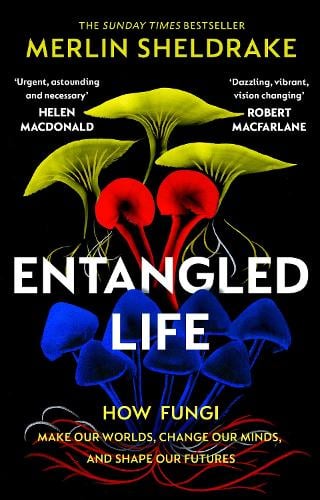
Entangled Life by Merlin Sheldrake. (Image source: waterstones.com)

As well as being a nature lover, I am nursing a life-long passion for the written word!

There are so many books on my reading list, and Entangled Life by Merlin Sheldrake, what looks to be an essential read, is only one of them. In fact, I wrote about some of the books on my wish list here, in my last blog post.

With a love of nature, there must be a desire to learn so that we can understand it better, and so we might be better equipped, with a deeper understanding, as we work for and with the natural world.


3. Taking notes, taking pictures, researching, blogging . . .

As I meet others with a passion for nature and wildlife, I see that the passion is explored and shared in a number of ways. Some, like I, write and blog, some take photographs, some write poetry, and some teach their children. There are a great number of creative, scientific, and social ways in which we can explore and express appreciation for the natural world. And they are, all of them, tremendously important.

Somebody told me, not too long ago, that she teaches her children about nature and wildlife, allows their fascination for it to grow, because if they care for it, they are more likely to do what they can to protect it. And that is why we, those of us that care for nature, must share that love; it might very well spark care and concern in someone else.


4. Tend to the garden


A planter, which is home to oxeye daisies and common poppies. (Photo from personal collection)

When I was little, animal life seemed so much more fascinating than plant life. Animals were dynamic, graceful, ferocious, wonderful things, and plants were just sort of there. They looked pretty sometimes, and I definitely appreciated them in a vague and poetic sort of way as I went bumbling and stumbling around the countryside where I lived. I loved the green of spring and summer. But my eye always drifted to the animals rather than the plants.

It's only in recent years that plants and I have become better acquainted. It started with a deeper appreciation for their place in the ecological interconnectedness of the natural world and has bloomed from there. I find myself fascinated by there resilience and their strength. A number of times I have been in the garden, noticed a problem and thought a plant done for, that it wouldn't survive, only to see, a few days later, a small green bud of hope.

Nowadays, I take quite a bit of pride in the verdant green wildflowers and strawberry plants. This year, I have planted chilli pepper plants and evening primrose, which I hope will establish themselves and continue the success I've seen with other plants in the garden. 


5. Ramble a while


Common toad pair. The season of new life is upon us! (Photo from personal collection)

Anyone that has read entries here before will know I am an avid walker. In fact, if you are a regular reader, you're probably sick of reading about it as I wax lyrical about our public footpaths. Well, just in case, I am sorry . . . But not that sorry.

With the warmer and sunnier months here at last, and storms that blew a mighty wind only memories now, I happily go off wandering walking routes. And, you know, I have learned valuable lessons on those paths. Lessons of silence, stillness, and stopping to just breathe. It is in stillness and silence that Nature reveals herself, in all her beauty. And, as you stand there with a quieted mind, you feel a little peace descend . . .


Thank you for reading. If you would like to support this blog, and contribute a little something towards some of these endeavours, please consider a small donation via ko-fi.com - a small tip could be all I need to get a plant pot, or finish off the pond.

I resist ad space here, wishing to generate something greater than sales. And so, with writerly ambitions, I must throw myself on the kindness of readers. I am a low income writer, and any little contribution will be of great help.

If you are able to do so, please consider supporting through ko-fi.com, where you will find links to other blog posts and other of my writing.

Thank you for reading, and please do share this post with friends and family. 

Monday, March 7, 2022

Um, not your usual humdrum nature blog post, that's for sure . . .


Just for fun . . .

Read to the rhythm of Stan by Eminem (M. Mathers, D. Armstrong, P.Herman) -


Chorus x2

The peat's been spread on gardens and it

Adds to greenhouse gases

The rainfall patterns are now changing

We can see it happen

But there's still those who deny the changes

So, I spend time with some plants and

They remind me, that it's not so bad

It's not so bad


Verse

Dear Boris, I tweeted you but got no reply,

I just want to know how you feel about climate change and why

We care more 'bout money, and we can't seem to realise

This is probably the last generation - there ain't no more time -

Because nature's worth saving; it enriches all of our lives.

But, anyways, fuck it, what's been up, man? How's all your kids?

The ones we know about! Nah, I'm just taking the piss!

Do you, BoJo! You don't care what anyone thinks!

At least, that's how it seems.

During COP26, you gave a real nice speech,

'Bout a change of mindset, but HS2 is killing ancient trees,

I know you probably hear this everyday, but you're not making sense,

But maybe that is the plan, you're just messing with our heads,

Like a toxic partner, you don't believe in what you've said.

Like the women you've laid, you're just out for what you can get.

Anyways, I hope you get this, man, hitting "send",

Just to chat, truly yours, I'm not your friend,

from Phil's pen.


Chorus

The peat's been spread on gardens and it

Adds to greenhouse gases

The rainfall patterns are now changing

We can see it happen

But there's still those who deny the changes

So, I spend time with some plants and

They remind me, that it's not so bad

It's not so bad


Verse

Dear Boris, you still ain't making sense, I hope you can see that,

I think it's kinda fucked up, and we're getting sorta mad,

If you want to exploit our ills, make money for your friends,

At least be honest, better yet, break the mould, deliver what you 'ave promised.

Generations will remember, historians note

How political jargon became hot air;

"Blah, blah, blah." Action comes too slow.

That's pretty shitty, man, you're, like, our fucking leader,

The one that we look to, and you're pulling our ancient trees up.

You say, people be used for animals to feed on.

Do you remember that from last year? When asked about biodiversity?

And the crises that it's facing?

At a panel conversation with kids!

But, that kinda stuff happens when you go off script,

And you mumble and fumble your way without thought.

So when I have a shitty day, and when life is coming up short,

I keep away from news of you, 'cause that shit hurts when I'm depressed,

I take myself off for long countryside walks instead,

Sometimes I just sit and let the birdsong inside my head,

It's such a perfect peace, just to be, listening to the wind washed leaves,

See, nothing you say is real, and there is no way I can respect you,

But you are what we have, your party, though I would rather forget you.

But there is still time to make a diff'rence, there's still time,

To address how vital ancient woodland is to sequestering carbon, how we will,

Strive to improve the health of what we have,

Sincerely yours, Phil,

P.S. Your message is falling flat!


Chorus

The peat's been spread on gardens and it

Adds to greenhouse gases

The rainfall patterns are now changing

We can see it happen

But there's still those who deny the changes

So, I spend time with some plants and

They remind me, that it's not so bad

It's not so bad


Verse

Dear Mister "I'm Too Good For The Unwashed Masses",

Learned at Eton how to look down on the lower classes,

It's been three years, still you're a joke, we don't deserve it!

I know you got my last two tweets, I tagged you in and I hashtagged 'em perfect!

So, this is an open letter for you, I hope you read it.

I'm in the garden right now, I'm getting ready for the spring.

Hey Bo, I drank a cup of coffee,

You dare me to hike?

You know the song by Eminem, the one that is called "Stan"?

About that fanatical guy who is obsessed with Shady

But Eminem answers too slowly, and the guy kills himself?

That's nothing like how this is, except for how I have framed this,

But that's just for fun, you're not the sort that I could have faith in,

Let alone become obsessed with, or kill myself over.

Nah, then I'd miss out on Oxeye daisies and Red clover,

For you, BoJo? No, I'll take bees and heather; think about it,

Don't ruin it now, I hope when you sleep you dream about it,

And when you dream I hope you see trees and flowers around you,

I hope your conscience eats at you and you see we cannot live without it,

Oh, BoJo! It can be rich! This whole world!

BoJo, listen to the birds in the treetops,

The Robin, a national favourite, will sing up there all through the year,

If we give them the space; we've got more than we really need here!

Well, gotta go, gotta tend to the garden,

Oh shit, sorry for the swearing, I do beg your pardon . . .


Chorus

The peat's been spread on gardens and it

Adds to greenhouse gases

The rainfall patterns are now changing

We can see it happen

But there's still those who deny the changes

So, I spend time with some plants and

They remind me, that it's not so bad

It's not so bad


Well, thanks for reading. That was just a bit of fun. Before you go, can I ask that you consider supporting this blog with a coffee from ko-fi.com - the caffeine keeps me trying out weird things, like setting nature blog posts to rap songs from the early 2000's!

I resist ad space as much as possible, wanting to generate greater things than sales here. But, with writerly ambitions, and the time and effort that goes into every post, I throw myself on the generosity of readers to support the blog.

If you can, donate the price of a coffee here, it really makes a difference. And, thank you, to every reader and supporter!


Tuesday, March 1, 2022

Who else loses time in nature?


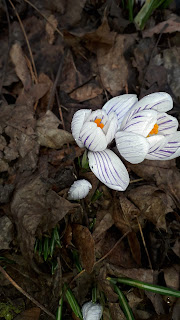
Crocus in the park. (Photo from personal collection)


I took a stroll into town, decided upon a visit to the museum. An exhibition of work created by artist Arabel Labrusan had caught my eye, but my eye is always ready to be distracted by nature and wildlife. And my eyes, and ears, were most definitely distracted.


Around the museum are gardens, where my attention was first drawn to the snowdrops (Galanthus nivalis), and then the daffodils (Narcissus pseudonarcissus); signs of coming spring. I lowered onto my haunches, trying to get a half decent picture of some flowers on my phone. The flowers are a natural reminder that everything passes, capturing their image a futile attempt at holding onto the beauty a while. Then, there are those of us that insist upon sharing that beauty, in spaces like this one.

The snowdrops stood, their perfect little white heads downward turning, looking like melancholy figures. The daffodils, by comparison, seemed happier with their open yellow faces. The trumpets, tending toward a richer and deeper yellow than the paler tepals, could have been calling out gloriously for coming spring. But, of course, that's just the romanticising anthropomorphising side of my love for nature.


A host of golden daffodils? No vale and hill, but in a museum garden. Bedford, Bedfordshire. (Photo from personal collection)

After the sights, it was the sounds, the bird calls and songs, and in following them I saw that I was surrounded by activity. Blackbirds (Turdus merula) were out, collecting materials and food, a number of them present in the garden. They rootled in amongst fallen leaves, and picked at things invisible to my eye on the grass. One, a female, with her feathers earthier than the coal coloured males, had a little trouble with a piece of material she had collected. A long and stringy looking piece of plant material, longer than it seemed she had estimated, she looked to be having some difficulty managing it in her bill.


I stopped, and stood a while, just watching and listening. The Robins (Erithacus rubecula), with their cascading songs, were easy to identify, their music being so present in both town and countryside. And then, there were the tits. A Coal tit (Periparus ater) call caught my ear. Their blue and yellow relatives often visit the feeders at home, but the Coal tits I only see and hear when out in parks and woods. Its calls rang in the gardens of the museum.

In a yew tree, in branches over my head, a brilliant red face, the colour of blood or rose petals. A little song, not as loud as others in the garden, but a pleasant little twittering. A Goldfinch (Carduelis carduelis) perched, its head turning, taking in the scene. On its wings with golden-yellow bars, it flew from the evergreen to a small bare tree, and stayed briefly on a branch before taking off, and away.


Long-tailed tits (Aegithalos caudatus), a pair at least, flitted from place to place, and a grey squirrel (Sciurus carolinensis) sat in a fig tree. Every feathered and furred life was out, busy in search of food and materials, the season for breeding almost here. The Goldfinch returned to the yew tree, something in its bill. When I saw another Goldfinch in the tree, I fancied that they were building their nest, setting up a home for imminent spring.

The various chirps, twitters, and pit-chu calls and songs carried on the air. From treetops and shrubbery, from the Blackbirds rootling around in leaves and other plant matter, tossing unwanted things aside, the sounds of nature and wildlife. People walked about. But, for a little while, the lives of these little birds seemed so much more interesting. As did the only briefly present flowers. I was lost in the purity of it all.


I didn't get into the museum, so lost I was in the birds and flowers. Nature and wildlife are like alien abductions; you can get taken away by them, and return having lost time without realising. Still, I suspect that visits to nature are more pleasant than the abductions. And much easier to believe in too.

I don't mind getting lost in nature, in parks and gardens and woodland, and I don't mind being distracted by the sights and sounds of wildlife. Sometimes even the smells. In fact, I hope that for a long time yet I am still lost and distracted, because when I am not I will have lost something pure. Something not influenced by practical day-to-day desire and needs, something that was there in childhood, and which has run like a thread through my life into adulthood. The thing that inspired Wordsworth. Yes, I hope that I am easily distracted a long time yet.


Thank you for reading. Before you go, can I ask that you consider supporting this blog with a coffee from ko-fi.com - the caffeine does, sometimes, get me where I mean to go!

I resist allowing ad space in this blog, preferring to generate greater things than sales in this place. Or, at least, hoping to generate greater things. But, with writerly ambitions, I seek support for my writing by throwing myself on the kindness of readers.

If you are able to do so, take a look at ko-fi.com - the price of a coffee can be a boost. And, I thank you, every reader and supporter!


Citizen science -- for the good of nature

  Holly blue (Celastrina argiolus) -- Butterfly Conservation undertake the Big Butterfly Count every summer, between July and August. (Photo...